
- Relaxed pace
- Culture
- Food
- Nature
Catalonia road trip in 8 days: monasteries & volcanoes
From the mountain monastery of Montserrat to the green volcanoes of the Garrotxa and old Girona. Short drives, stops on the way and time for long lunches.
- Duration
- 8 days, 7 nights
- Start and end
- Barcelona (BCN)
- Longest drive
- approx. 2 h
- Overnight stays
- 3 places
The best part lies in between
We drew the line from A to B. But a road trip happens along the way: the lake after a bend, the village where lunch runs long, the viewpoint where you pull over just because. Those stops make the trip yours.
An hour inland from Barcelona, Catalonia changes colour. The coast gives way to jagged rocks, beech forests on old lava and villages built on basalt. In the evening half the village sits outside on the square.
This route takes you to the monastery of Montserrat, the volcanoes of the Garrotxa and the old town of Girona. The drives are short; the longest takes about two hours. You sleep in three places, at least two nights each, so you do not pack your bags every day.
The roads are good. Only the road up to Montserrat winds its way up the mountain. If you want a day by the sea, you can drive to the Costa Brava on day 7.
The route, day by day
- Overnight stay or destination
- Stop
Dotted lines connect the stops in order; they do not follow the roads.
Day 1 · A night on the mountain
Barcelona (airport) → Montserrat · approx. 1 hour driving · 2 nights Montserrat
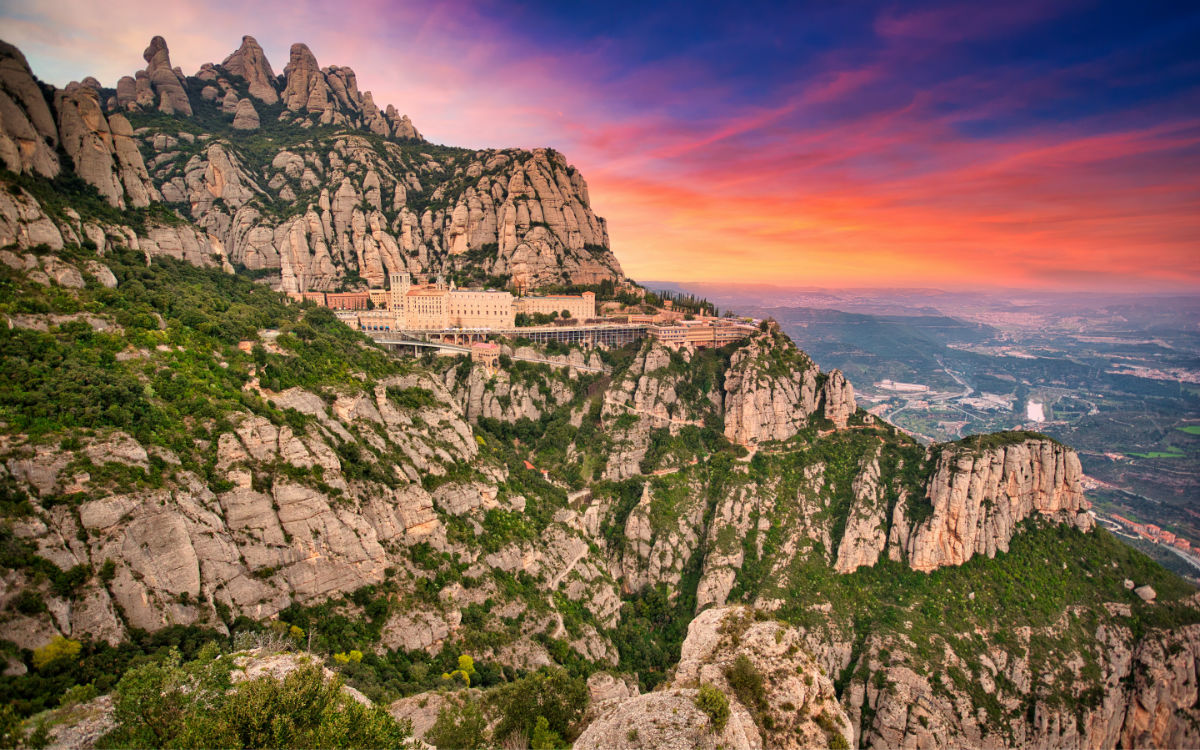
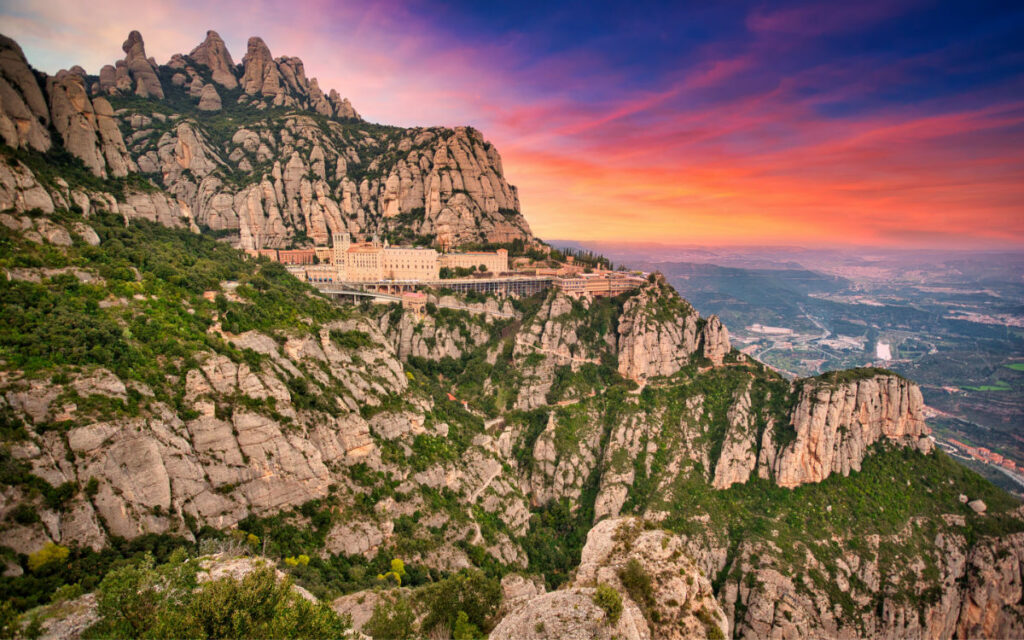
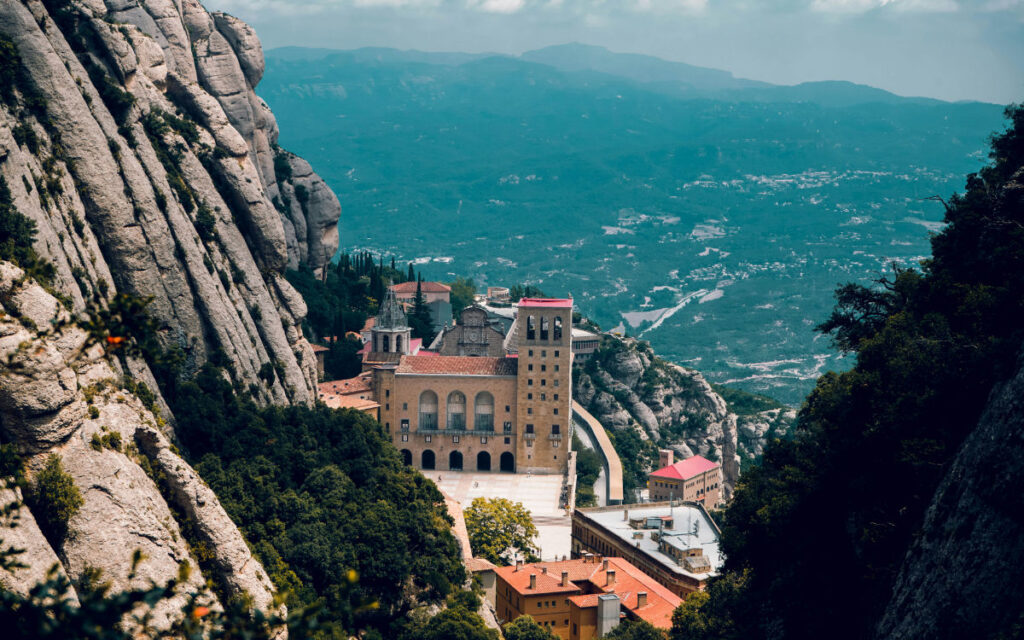
Late in the afternoon, when the last coaches drive down the mountain, it goes quiet around the monastery of Montserrat. The rocks turn orange in the low light.
If you stay the night here, you have the mountain almost to yourselves. From the airport it is about an hour’s drive to Montserrat; the last stretch winds uphill. At weekends and on public holidays the car park fills up fast: come early, or pick a weekday.
Stops
- Montserrat Castle or monastery
Benedictine monastery against the rock face of the mountain, home to the Moreneta, the Black Madonna.
Tip: At weekends and on public holidays the car park fills up fast: come early or on a weekday.
Day 2 · Higher than the monastery
No driving · Montserrat
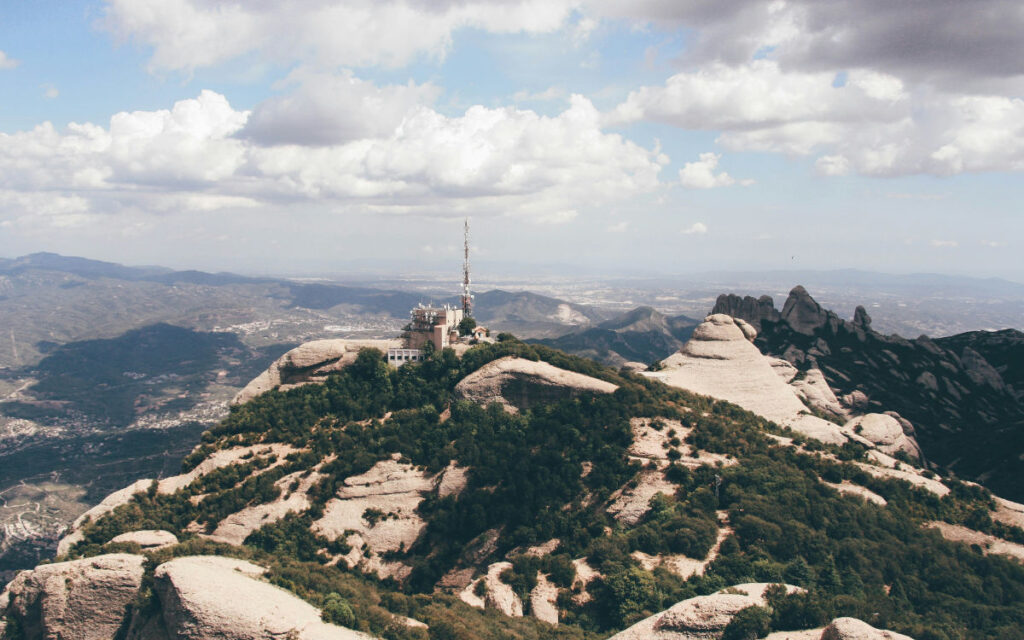
Above the monastery, paths run between the rock pinnacles of the massif to Sant Jeroni, the highest point. On clear days the Pyrenees stand out on the northern horizon.
The Sant Joan funicular takes you to the start of the walk in a few minutes. It closes for a few weeks in winter for maintenance, and in summer on days with a high fire risk. The paths are stony and there is little shade: take water and sturdy shoes.
Back at the monastery is the Moreneta, the Black Madonna that means a great deal to Catalans. If you want to hear the Escolania boys’ choir, check beforehand when it sings.
Stops
- Sant Jeroni (Montserrat) Viewpoint Walk
The highest point of Montserrat, reached on foot from the top of the Sant Joan funicular.
Tip: Take water and sturdy shoes: the path is stony and there is little shade. The Sant Joan funicular closes for a few weeks in winter for maintenance, and in summer on days with a high fire risk.
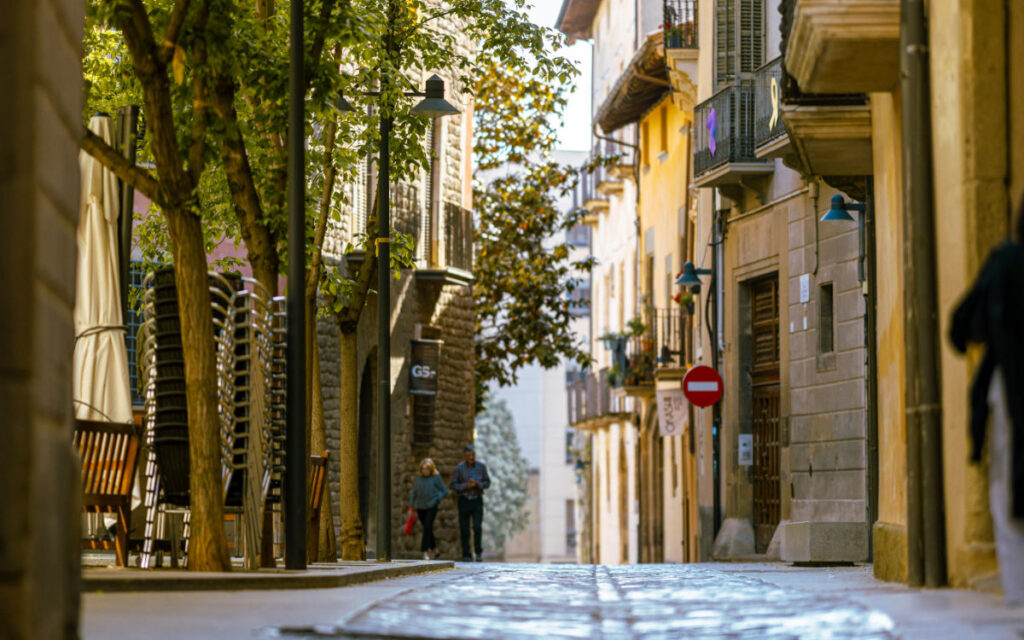
Day 3 · Market, sausage and a tunnel to the green
Montserrat → Vic → Olot · approx. 2 hours driving in total · 2 nights Olot
Under the arcades of the Plaça Major in Vic, waiters push tables out onto the square. On market days the square is full of stalls with cheese, vegetables and fuet, the thin dried sausage the town is known for.
Vic lies nicely halfway; check beforehand which days are market days. Park on the edge of the old centre and walk the last bit. Close to the square stands a Roman temple from the second century, hidden for a long time between later houses.
Then you drive through a long tunnel to Olot, in about three quarters of an hour. On the other side the landscape is green and hilly: the Garrotxa.
Towards sunset you walk up the Montsacopa in a quarter of an hour, the volcano in the middle of Olot. From the top you see the town and the green cones around it in the last light.
Stops
- Plaça Major (Vic) Market or tasting Old village or town
Large square with arcades and terraces. On market days it is full of stalls.
Tip: Park on the edge of the old centre and walk the last bit.
- Roman temple (Vic) Castle or monastery
Roman temple from the 2nd century, hidden for a long time between later buildings.
Tip: A few minutes’ walk from the Plaça Major.
- Montsacopa volcano (Olot) Sunset Viewpoint
Volcano in the middle of Olot, with a small chapel on the crater rim and a view over the town.
Tip: Walk up from the centre; you can leave the car at your hotel.
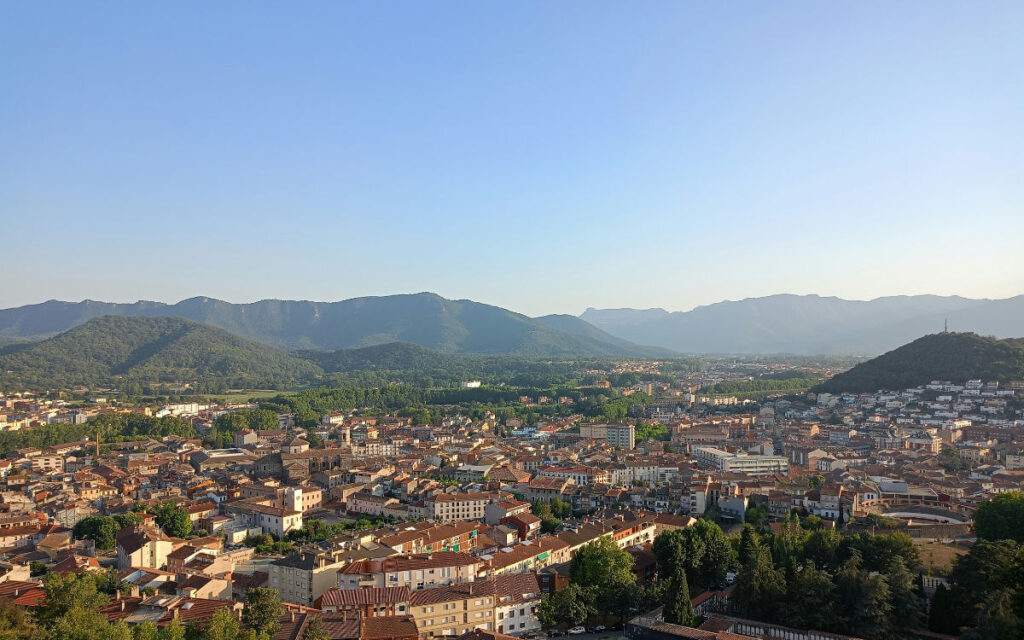
Day 4 · Walking over a volcano
Short drives · Olot and around
The volcanoes of the Garrotxa have been quiet for some 13,000 years. Beech trees grow on the old lava flows, and a Romanesque chapel stands on the floor of the Santa Margarida crater.
The classic loop walk is about 11 km and takes half a day. You start at the Santa Margarida car park, on the road from Olot to Santa Pau. The route passes the Croscat, at about 160 metres the highest volcanic cone on the Iberian Peninsula, and goes through the Fageda d’en Jordà. There is no drinking water on the way.
Santa Pau, a medieval village with an arcaded square, is a few minutes further on. Order the fesols, the local beans, and take your time: today is about the walk.
When it rains, Espai Cràter, the interactive volcano museum in the middle of Olot, is a good alternative. At weekends in autumn the forest is busy: go on a weekday or early.
Stops
- Volcano loop walk Nature Walk
A loop of about 11 km over the old volcanoes: through the crater of Santa Margarida, past the Croscat and through the beech forest of the Fageda d’en Jordà.
Tip: Start at the Santa Margarida car park on the road from Olot to Santa Pau. There is no drinking water on the way.
- Santa Pau Old village or town
Medieval village with an arcaded square and a castle, close to the volcanoes.
Tip: Order the fesols de Santa Pau, the local beans.
- Fageda d’en Jordà Nature Walk
Beech forest on an old lava flow from the Croscat, full of small round hills.
Tip: At weekends in autumn it gets busy: go on a weekday or early.
- Croscat volcano Nature Sight
At about 160 metres the highest volcanic cone on the Iberian Peninsula. An old quarry shows the inside of the volcano.
Tip: Stay on the marked paths: the ground is fragile.
- Santa Margarida volcano Nature Walk
Volcanic crater with a Romanesque chapel on its floor. Part of the best-known walking route in the nature park.
Tip: Start at the Santa Margarida car park on the Olot–Santa Pau road. Take water: there is no drinking water on the way.
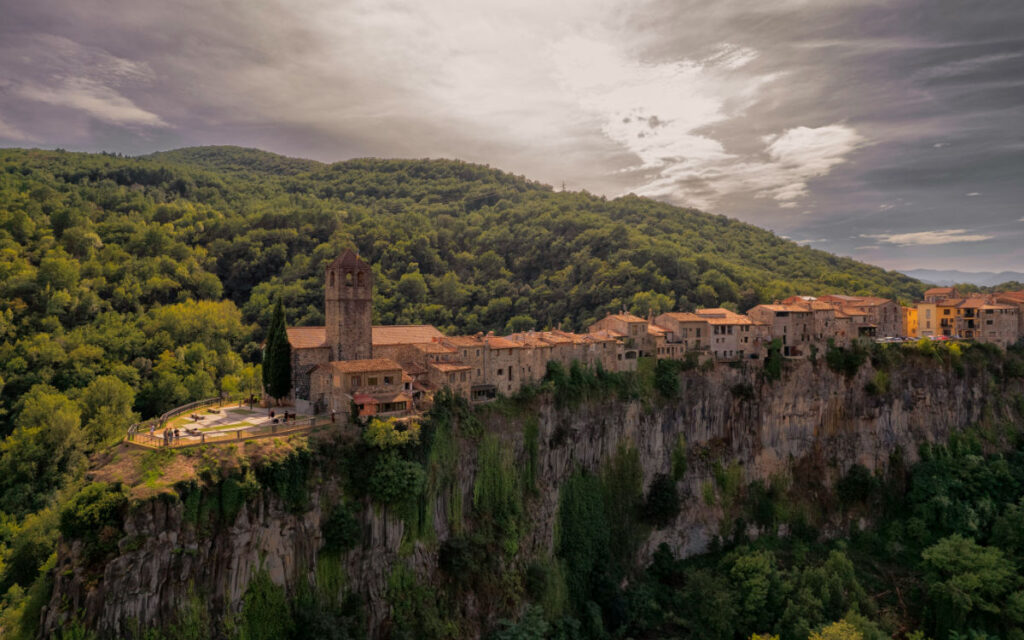
Day 5 · The village on the edge of the cliff
Olot → Castellfollit de la Roca → Besalú → Girona · approx. 1 hour driving in total · 3 nights Girona
A quarter of an hour after Olot, Castellfollit de la Roca appears: a row of houses on the edge of a basalt cliff more than 50 metres high. The river flows right underneath.
The best view is from below, from the road along the river. In Besalú you walk into the town over a fortified stone bridge across the Fluvià. The old Jewish quarter lies in the narrow streets. In August it is very busy here: come early.
From there it is about half an hour to Girona.
Stops
- Castellfollit de la Roca Old village or town Viewpoint
Village on the edge of a basalt cliff more than 50 metres high.
Tip: The best photo is from below, from the road along the river.
- Besalú Old village or town
Medieval town with a fortified stone bridge over the Fluvià and an old Jewish quarter.
Tip: August is very busy: come early in the morning.
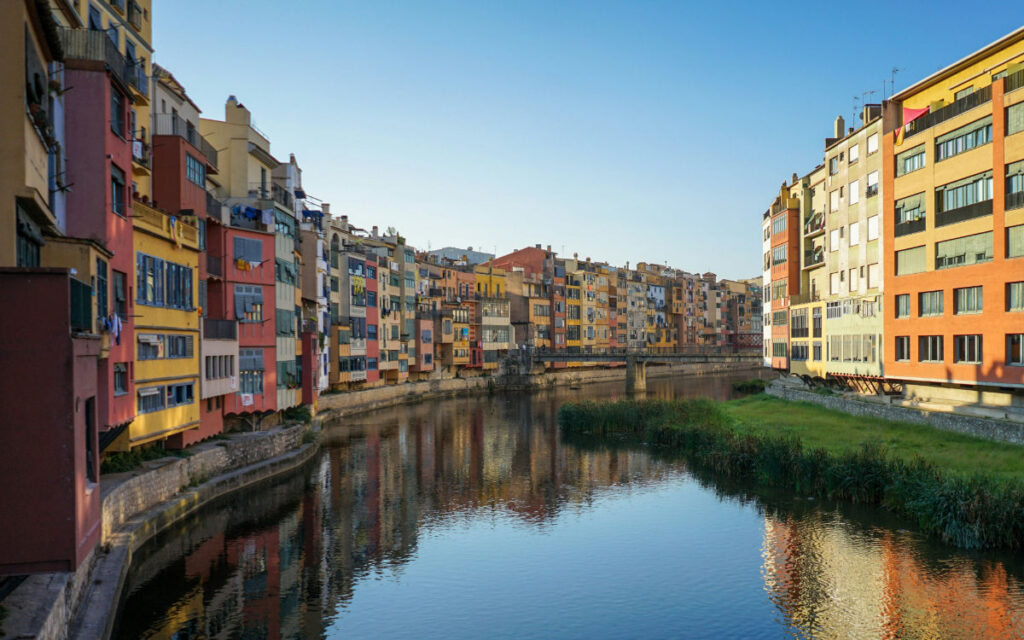
Day 6 · Girona on foot
No driving · Girona
Along the Onyar, the houses of Girona stand right by the water, their fronts in ochre, rust and yellow. Above them rises the cathedral, at the top of a wide Baroque staircase.
Girona is a city for walking. After the cathedral, walk a stretch of the medieval city wall, with views over the rooftops; parts may be closed for a while. In the Call, the old Jewish quarter, the alleys are narrow and steep.
The archaeology museum in the Romanesque monastery of Sant Pere de Galligants is a good plan for a rainy afternoon. The old town is largely car-free: choose a hotel with its own parking or a garage on the edge.
Stops
- Girona Cathedral Castle or monastery
Cathedral at the top of a wide Baroque staircase, in the middle of the old town.
Tip: Expect a long flight of steps; in summer, go in the morning.
- Girona city walls (Passeig de la Muralla) Viewpoint Walk
A walk along the medieval city wall, with views over the rooftops.
Tip: Parts of the wall may be closed for a while; start at the gardens behind the cathedral.
- Sant Pere de Galligants (Museu d’Arqueologia) Castle or monastery Museum
Romanesque monastery that houses the Archaeology Museum of Catalonia in Girona.
Tip: Good for a rainy afternoon in Girona.
Day 7 · Free: Girona or the coast
Optional · approx. 45 minutes driving to the coast
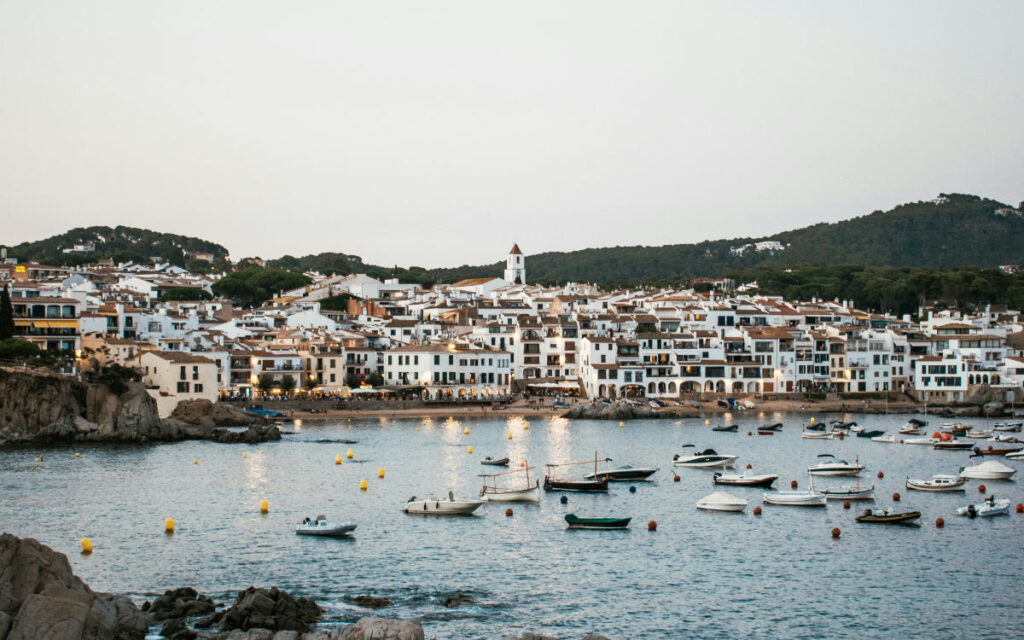
In Calella de Palafrugell, fishing boats lie on the beach in front of a row of white houses. A coastal path winds along the rocks to the next coves.
Calella is about 45 minutes from Girona. In July and August parking on the coast is hard: come before ten. If you would rather have a quiet day, stay in Girona.
Stops
- Calella de Palafrugell Old village or town Swimming spot
Fishing village on the Costa Brava with white houses, small coves and a coastal path.
Tip: In July and August parking is hard: come before ten.
Day 8 · One last morning
Girona → Barcelona (airport) · approx. 1 h 15 driving
One last breakfast on a square in Girona, while the city wakes up and the first terraces open.
Then it is just over an hour on the motorway to Barcelona airport. Allow extra time: traffic around the city often comes to a standstill.
Make this trip yours
Add the stops you love, an extra day where you want to linger, and see straight away whether every day still works.
Frequently asked questions
Are 8 days enough for this route?
Yes, at a relaxed pace. You never drive much more than two hours a day and you have a free day. More time? Add a night in Olot for the walks, or two nights on the Costa Brava.
Do you really need a car?
Not necessarily for Montserrat and Girona: you can reach both by train. For the volcanoes, Castellfollit and Besalú you do: there is little public transport, and the best places lie just outside the villages.
When is the best time to go?
Spring and autumn. In May and June the land is green and pleasantly warm. In October and November the beech forest changes colour, but it is busy at weekends. In July and August it is hot, and Besalú is crowded.
Can I do the route the other way round?
Of course. Start in Girona and end at Montserrat. On the last day you then drive about an hour to the airport.
Can I change the route?
Yes. In the planner you add stops or rest days and see straight away whether your days are still doable. Then you get your own travel plan as a PDF.
Check opening hours, prices and the roads before you book and on the day itself. 29 Roads is an inspiration platform, not a travel agency.